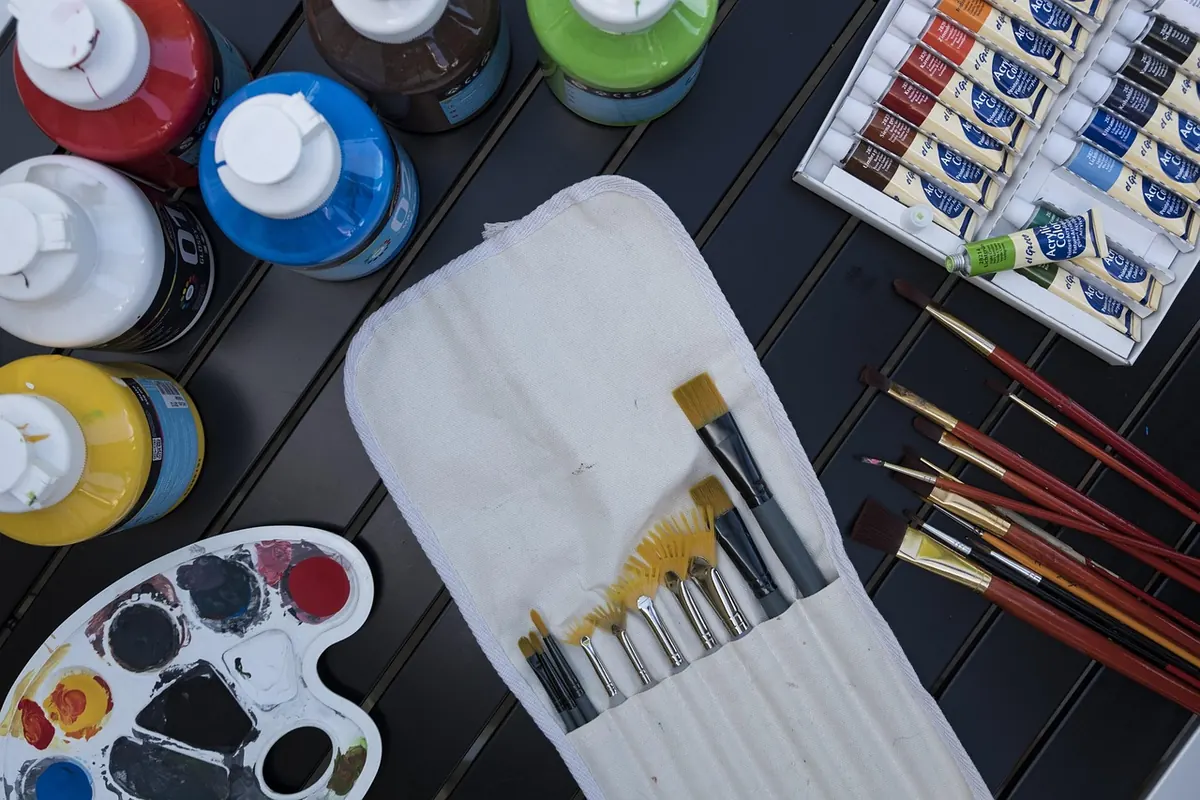
Standing in an art shop between two racks of paint, the labels tell you very little. Both say "artist quality", both cost more than you hoped, and neither mentions the thing that will shape your first year of painting: how the paint behaves on the palette and how long it stays workable.
Acrylics and oils are both perfectly good for beginners, and plenty of painters use both. The right choice comes down to how you like to work, how much ventilation you have, and how patient you are.
Acrylics dry by evaporation. A thin layer can be touch-dry in minutes and ready to paint over within the hour; thicker passages may take a day. That speed is wonderful when you want to block in shapes, layer colours, tape off edges or finish a small study in one sitting. It becomes a problem when you are halfway through a soft blended sky and the paint on your canvas has already set.
Oils dry by oxidation instead. A thin layer might be touch-dry in a day or two, thick paint stays soft for much longer, and a finished oil painting can take months to dry properly. In return, the paint stays open on the palette. You can leave it, come back the next morning, and carry on blending exactly where you stopped.
Two habits make the fast drying of acrylics manageable:
Acrylics are usually the cheaper way in. A starter set of student-grade acrylics, a pad of acrylic paper and a couple of synthetic brushes will get you painting for very little. Oils add extras: a solvent, a medium such as linseed or a modern alkyd, a jar or two for cleaning, and rags you are happy to throw away.
Then there is running cost, which is where oils claw some ground back. You use a tiny amount of oil paint to cover a surprising area, and it does not set on the palette while you think. Acrylics skin over in the tray if you get distracted, so a certain amount of paint is always wasted.
Surfaces matter too. Acrylics will grip canvas, board, heavy paper, wood and fabric, which makes cheap practice surfaces easy to find. Oils need a properly primed, suitably rigid support; painting oil straight onto raw canvas or paper is asking for trouble later. Acrylic gesso is the standard primer for both.
Acrylic cleanup is water while the paint is wet, then warm soapy water, then a rinse. The trap is the ferrule, the metal band holding the bristles. Once acrylic sets in there, the brush is finished. Rinse brushes every few minutes rather than at the end of the session.
Do not tip acrylic rinse water down the sink if you can avoid it. Let the solids settle, pour off the clearer water, and put the sludge in the bin. Your local council's household waste guidance will tell you what is accepted where you live.
Oils need solvent, a two-jar system, or a wipe-then-oil-then-soap routine. Solvent means fumes, so ventilation is not optional. One safety point worth knowing: rags soaked in linseed or other drying oils can generate heat and ignite on their own. Spread them flat to dry outdoors, or keep them in a lidded metal container.
Acrylics mix quickly and change slightly as they dry, usually a shade darker and more matte than they looked when wet. Mix a larger batch than you think you need, and test the colour on a scrap of the same surface before committing it to the painting.
Oils reward patience. Wet-into-wet blending, long gradients and soft flesh tones are far easier when nothing is setting underneath your brush. The classic rule is worth remembering:
Fat over lean. Later layers should contain more oil than earlier ones, or the surface can crack as it dries.
The two media are not rivals. Many painters block in with acrylics because they dry fast, then work over the top with oils for blending and depth. If you start that way, keep the acrylic layer thin and matte so the oil has something to grip.
Acrylics are water-based, so no solvent fumes, but that does not make them chemical-free. Some contain preservatives and ammonia, and certain pigments, including cadmiums and cobalts, deserve respect whatever the binder. Do not eat or drink in the studio, keep brushes out of your mouth, and wash your hands properly.
With oils, the main concern is solvent exposure. Use the least you can, work near an open window, wear nitrile gloves, and never set up a solvent-heavy practice in a bedroom or anywhere children sleep. If you are pregnant, asthmatic, or have another respiratory condition, speak to a qualified health professional before building a routine around solvents. Water-miscible oils and solvent-free cleaning methods exist, but check what each product actually requires rather than assuming.
Buy one medium, not two, and buy it small. A six-colour palette is plenty: titanium white, ultramarine, a warm yellow, a cool red, yellow ochre and burnt umber. Add two or three brushes, a flat, a filbert and a small round, and a pad of canvas-textured paper. That is enough for a month of real work.
Then paint three small studies in your first week. Notice what frustrated you. If you found yourself fighting the drying time, try a stay-wet palette and a little retarder before you abandon acrylics. If the smell or the setup put you off oils, that is useful information too, and it costs nothing to switch later.
Neither medium is more serious or more "proper" than the other. The painters you admire chose whatever let them work most often, and for a beginner that is the only test that really matters.
Photo: Bru-nO / Pixabay